Direct answer
Private-label OEM develops and manufactures your colour/branding on a controlled block with sample → PPS → bulk gates (library remake typically approximately 7–9 working days after confirmation; MOQ from 150 pcs per style/color). Finished stock platforms sell near-ready styles for speed with limited construction and fabric control. Choose OEM when fit, fabric and shade continuity are brand assets; choose stock platforms when calendar speed matters more than differentiation — and do not confuse either with stock fabric vs custom dye inside an OEM programme.
| Topic | Private-label OEM | Stock platform |
|---|---|---|
| Speed | Sample gates then bulk | Faster if style exists |
| Differentiation | Block + fabric control | Mostly logo / trim |
| MOQ logic | Garment from 150 pcs per style/color typical | Platform colour floors |
| Shade continuity | Stock or custom dye rules | Running platform shades |
| Best when | Brand assets need control | Speed over uniqueness |
Two different products called “private label”
Buyers searching for men’s gym wear often meet two offers that sound similar and behave differently. True private-label OEM means you colour, brand and pack a development block — library or custom — through sample gates and PPS before bulk. Finished stock platforms (catalogue / fashion-go style ready garments) sell near-finished units with limited change windows: pick a style, add a logo, ship. Both can carry your mark. Only one gives you pattern ownership trajectory, fabric platform control and shade continuity rules that survive a second season.
What stock platforms optimise for
Stock platforms optimise speed and simplicity. MOQs can look attractive because the factory already cut risk into a shared style. Sampling may be a pick-from-warehouse unit or a quick logo trial. That helps a first drop when calendar pressure is extreme and differentiation is mostly brand mark. The trade-off is structural: fabric and block are shared; shade continuity depends on what the platform still runs; construction changes are expensive or refused; QC language follows the platform’s standard, not your athlete brief. If your competitors buy the same platform, your “unique” short is a logo apart.
What private-label OEM optimises for
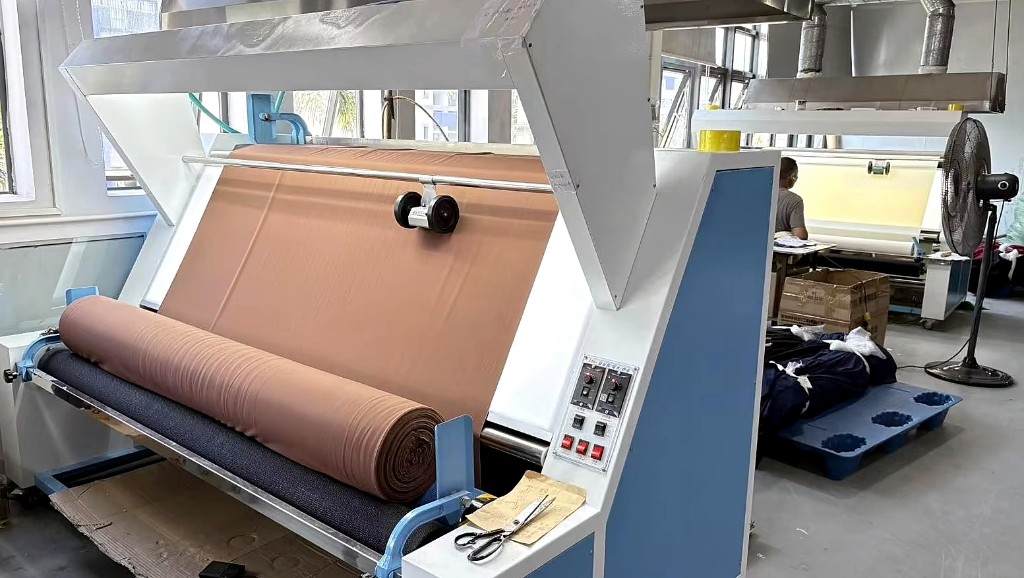
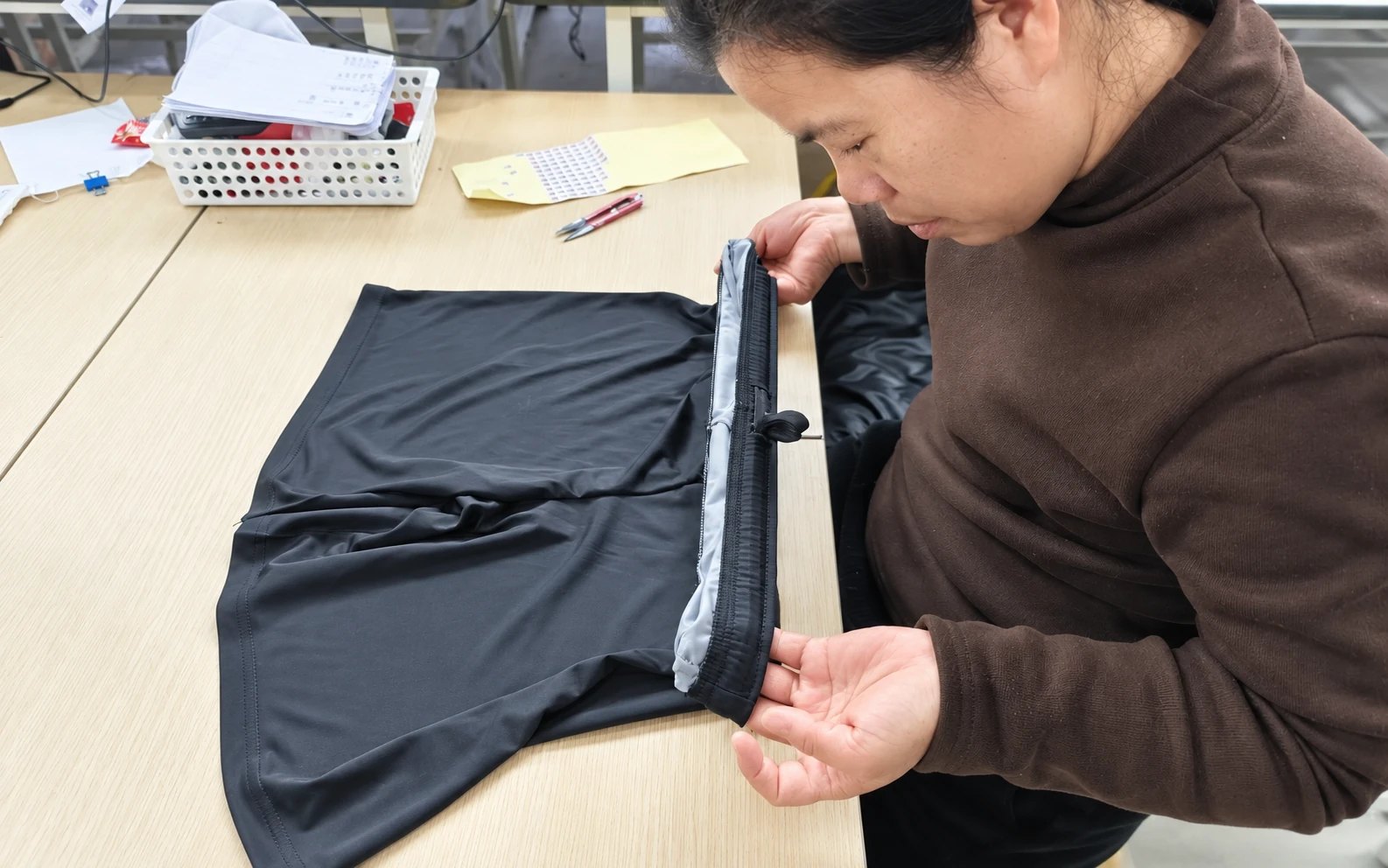
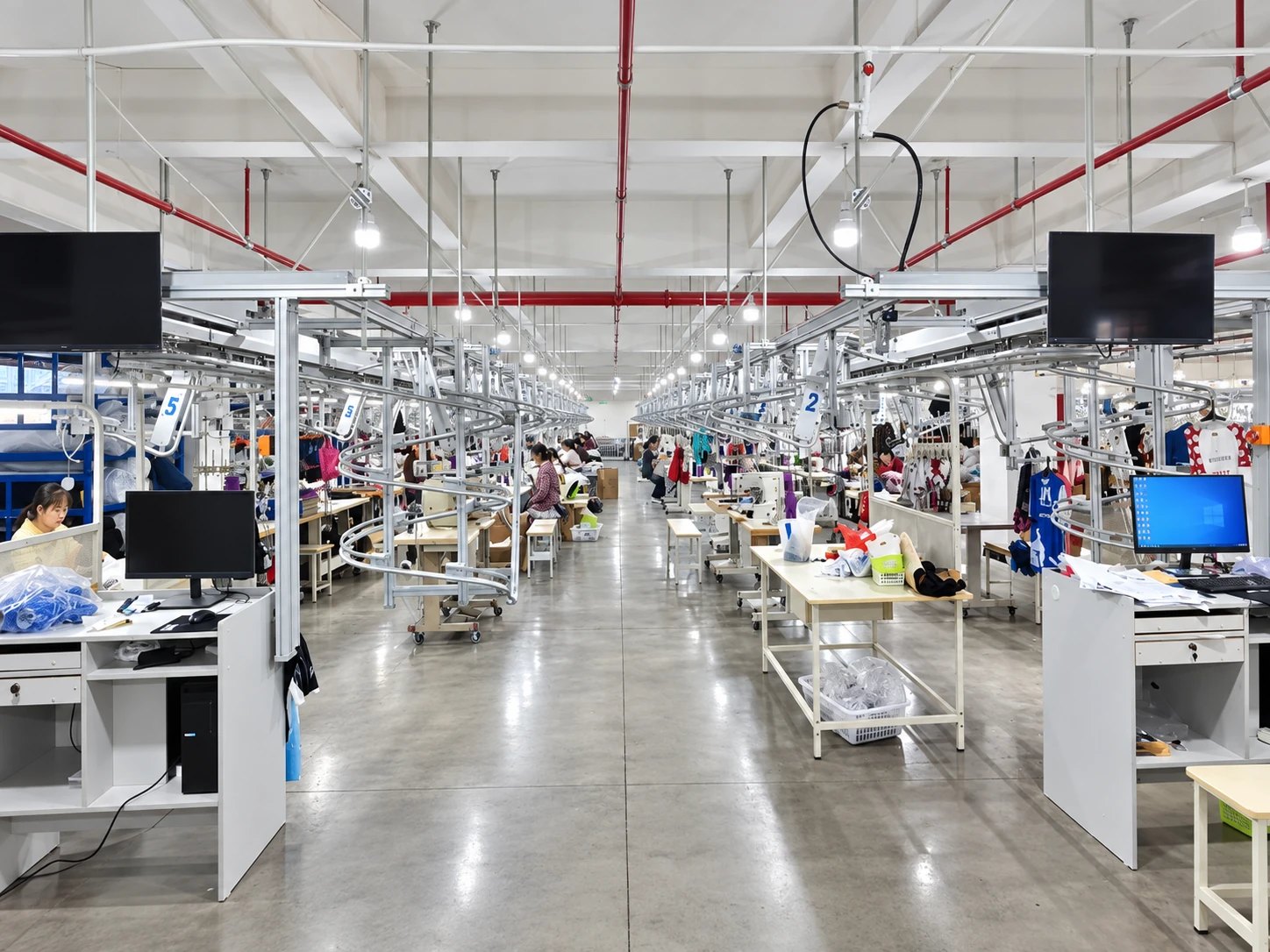
Private-label OEM with a manufacturer like ELEVIA optimises control. You start with a library remake (typically approximately 7–9 working days after confirmation after confirmation) or a custom prototype, lock GSM and construction, then open colour from {TERMS['moq']} per style/colour with branding and pack marks you own. You can migrate from library to deeper custom when sell-through justifies it. You write dye-lot tolerance, Incoterms and lab scopes into the PO. The cost is discipline: no shelf-stock sample pretending to be development; PPS before bulk colour; measurable fit comments. That discipline is the product.
MOQ, sampling and hidden cost
Compare total cost of change, not only the headline MOQ. Stock platforms look cheap until you need a different inseam, liner, or fabric hand — then you pay redesign fees or abandon the brief. OEM library MOQ from 150 can look higher until you realise you are buying a repeatable block with remake rules. Sample fees, courier and PPS rounds belong on both comparisons. A “free sample” from stock that does not match bulk dye lots is not free — it is a deferred quality dispute.
Brand control, QC and market docs
If brand colour continuity across tee, short and layer matters, OEM with stock-vs-custom dye rules beats platform running shades. If EU/UK programmes need REACH-oriented lab scopes and clear FOB/DDP ownership, write those into an OEM quote — do not assume a stock catalogue PDF covers importer onboarding. QC should reference your PPS photo and points of measure, not a generic platform checklist. Compression, 2-in-1 and travel pants especially punish shared-platform compromises because recovery and pocket geometry are athlete-critical.
How to choose without ideology
Choose stock platforms when speed beats differentiation and you accept shared blocks. Choose private-label OEM when fit, fabric honesty and shade continuity are brand assets. Many serious buyers do both: a fast stock filler SKU beside an OEM hero capsule. Do not confuse this decision with stock fabric vs custom dye inside an OEM programme — that is a dye-path choice after you already own the development track. If you need a sample-led OEM path, start with a remake brief and refuse to treat a warehouse unit as PPS.
Practical RFQ split
On stock-platform RFQs, ask: what can change, what MOQ applies per colour, whether the sample matches bulk lots, and who owns leftover shade risk. On OEM RFQs, ask: sample track, remake timing, garment MOQ, stock-vs-custom dye, PPS gates, Incoterms and doc scopes. Put the answers on one commercial sheet so finance and brand stop arguing from different definitions of “private label.”
Where ELEVIA sits in the choice
ELEVIA is built for sample-led private-label OEM — No inventory / shelf samples, library remake and custom tracks, garment programmes from 150 pcs per style/color. We will tell you honestly when a brief is better served by a fast stock filler elsewhere, and when your athlete promise requires a controlled block. The goal is not ideology; it is a sourcing mix that matches risk. Read this article beside stock-fabric-vs-custom-dyed-moq so dye path and platform path stay separate decisions.
Common mistakes
- Calling a stock-platform logo run “OEM development”
- Using a warehouse sample as PPS authority
- Expecting custom inseam on a frozen stock block at stock pricing
- Confusing finished stock platforms with stock fabric dye paths
Buyer advice
- Split RFQs: platform change windows vs OEM sample gates
- Ask whether the sample matches bulk dye lots
- Keep an OEM hero capsule even if you use stock fillers
- Write Incoterms and doc scopes on OEM quotes for EU/UK
Buyer FAQ
Questions procurement usually asks next
Is stock platform always cheaper?
Not on total cost of change. It is cheaper when you need zero construction change and accept shared blocks.
Can I start on stock and move to OEM later?
Yes — treat it as a new development track. Do not assume the platform pattern is yours.
Is this the same as stock fabric vs custom dye?
No. Stock vs custom dye is a colour path inside OEM. Stock platforms are finished or near-finished garment offers.
Evaluate styles
From this insight → library products
Open a sample path on a live block — then confirm fabric platform and MOQ on the RFQ.
Downloadable library summary: Lookbook PDF. Legal entity: Guangzhou Elevia Apparel Technology Co., Ltd.